A Tribute to the Best Lenses I Ever Used: My Top Picks Part 1
This post is a tribute to the best lenses I ever used. Most of them have come and gone, they met a need at a certain point in time and that need keeps on drifting as I have now come to accept. That means I shot with a lot of lenses over the years. A lot of very good lenses, I might add. This post will have some short mini-reviews of the lenses that I think are the best of the best. I don't have any test charts or anything, this is based on my experience using the lens. That feeling of 'wow' when you see what the lens can do. It is completely subjective and that is okay.
I am not sure whether writing this series of posts is a good idea as it makes me want to get reacquainted with some of these lenses all over again... But anyway, here we go:
Let's start with the mount that I used when taking this hobby a little more seriously, the Nikon F-mount. I used APS-C and full frame Nikon DSLRs and I used these lenses across them. But here are a few of the F-mount lenses that I think are so good that they still make me consider buying a Nikon DSLR to this day.
The first lens I want to highlight is easily in my top-3 best lenses of all time, across any mount. It is that good. I still want to own it. Even though it is a bit big and it probably would not see much use. Even now, I quickly browsed to MPB.com to see what the price of this lens is these days. I need to stay strong and not buy it. Or should I do the opposite? Anyway, I digress. The lens is the stellar Nikon AF-S Nikkor 28mm f/1.4E ED. Quite a mouthful as always with Nikon.

I used this lens on F-mount DSLRs as well as adapted to Z-mount cameras like the Z6ii and Z7ii. I don't even know what to say about this lens. It does everything so well. It is sharp, much sharper than the Leica 28mm Summilux that comes with the Q. And not in a harsh way because the out of focus area is so creamy and almost dreamy to go with that sharpness. If you like 28mm and you are okay to carry around a bit of weight then this is your lens to use. It weighs 650 grams or so and you'd need an adapter if you want to use it with a mirrorless camera. Again, I am so close to picking up a Nikon camera just so I can use this lens again.

The next lens in the F-mount that I absolutely adore is the Nikon AF-S Nikkor 58mm f/1.4 G. Those who know their way around an F-mount can probably guess what my third legendary lens pick will be. But before we get to that, let's talk about the 58mm. This was always a weird lens and it has a following of people who loved it for all its flaws, and a group who despises it because of the same flaws. What are these flaws? On a DSLR I really struggled with getting focus right. This has probably been one of my lenses with the worst autofocus performance I have ever seen. On Z-mount mirrorless cameras it is like a different lens, autofocus wise. It performs admirably and then you can really get the lens to do what it does best, create this soft sharp fuzzy warm atmosphere when you shoot wide open. Close it down and you have a pretty good performer. But this lens needs to be shot at 1.4 or 1.8, otherwise you might as well shoot with a lens that is not so fickle.

To close our the trio of stunning performers in the F-mount, I have to mention the lens that has no equal; the Nikon AF-S Nikkor 105mm f/1.4E ED. Sigma made a lens like this but it was so heavy and bulky it is barely usable. The Nikon 105mm F1.4 is not light, but also not ridiculously heavy and bulky. You actually can take this out. And when you do.... magic happens..... Holy moly this is a special lens. The images that come out of it are rather similar in look and feel to the 28mm F1.4. The same stunning sharpness and somehow warmth and richness that never feels too much happens at the same time. Again, sometimes I dream of going back to Nikon just for this lens. Like the 28mm. And as much as I loved the 58mm, this one is on a lower rank compared to the 28mm and 105mm. These two are in my top-3 of all time, across all mounts. More on that later. Maybe just these two lenses is all you need. But they are too heavy. I have to admit it. Image quality wise, I have not found any better alternative. It does not even come close.

On to the second mount that I stepped into, early in my hobbyist endeavors; the Leica M-Mount. Boy oh boy, there are a lot of contenders here. I will stick to three like I did for the F-mount. The first is an easy choice as any Leica shooter will tell you the same thing; the Leica 50mm f/1.4 Summilux-M ASPH is nothing short of incredible. Which ever version you pick, there might be some small differences between them but this lens is stellar. Is it that Leica look? I don't know but it sure looks good. And so incredibly small, albeit without autofocus of course. But this is probably the best 50mm I ever used. And I did own the Leica 50mm F1 Noctilux as well but that was a weirdo with super unpredictable bokeh. I also used the Sony 50mm F1.2 which is great but lacks that gooyiness of the Leica. I currently own the Sony 50mm F1.4 and it is a fine lens but no comparison to the Leica. Hmmm. No, don't go there, stay strong. I have to note something about Leica lenses in general and it very much applies to the 50mm Summilux ASPH; the feel of these things is incomparable. The build quality, the slide out sunshade, the aperture ring. Photography is a very tactile hobby and Leica lenses are among the best to enjoy that part.
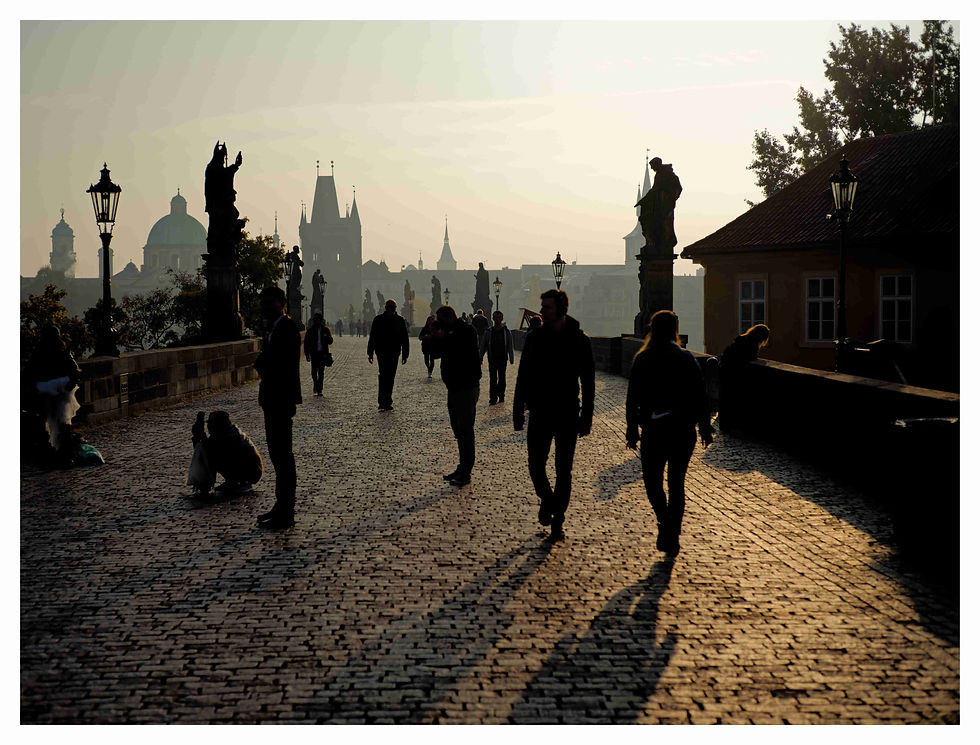
On two my second pick for M-mount. I thought long about this but then I ended up with two very clear winners. And they actually make a nice three lens set, just like the F-mount trio. Let's start with the Voigtlander Nokton 21mm f/1.4 VM. It's wide. Much wider than I normally shoot. And yet, I loved it. I used it on my Leica SL as on a Leica M you are just guessing most of the time with the framing going beyond the viewfinder. Anything wider than 28mm is a really challenge for me and I have deep appreciation for anyone who can shoot wide. And I don't mean focus stacked landscape stuff, because that is pretty boring.
I mean, in theory, taking a 20mm-ish lens into an urban environment should present great framing opportunities but mine somehow all look like an uncoordinated mess. Nevertheless, I enjoyed the Voigtlander 21mm for what it was and I think it is a stellar performer. It's sharp, it's creamy and it is not even that bulky given it's aperture.

My last pick for the M-mount has to be that unique focal length that only lives in the Leica realm; the Leica 75mm f/2 APO-Summicron-M ASPH. Probably my most used Leica lens across various bodies. I never quite understood while all the photography manufactures have standard zooms with 70mm or 75mm as the cutoff point, like in 24-70mm and 70-200mm, that none of them build primes in this focal length. But Leica sure did. And this one is a winner. Compact and reminiscent in build of the previous mentioned Leica 50mm Summilux ASPH, I love this lens. Just a little more tele than a fifty but still super versatile and a great longer option for a two-lens kit with a 28mm or even a 35mm. I rocked this combo for a long time with the original Q on the wider end and the 75mm Summicron on an M-body. Amazing lens.

By now, I realized this post will have to be split up as I only covered two mounts and there is more to come since I shot with pretty much all mounts except Canon. I don't know why but somehow that just never happened. Many friends shot with Canon and when I handled their cameras for a bit, I was always confused about how to operate them. I feel a fundamental mismatch with the Canon design philosophy. I am sure it's me, not them.

Let's do one more mount in this post and pick up the rest in part 2. The third mount I want to cover is the Fujifilm X-mount. I find Fujifilm cameras and lenses very sympathetic. You could even say likeable. Why? I don't know. Sony is just.... competent. Very competent, I might say, but fun is not something I would quickly use to describe the world of Sony. But it does apply to Fujifilm. Maybe it is a size thing. Anyway, I digress. Let's talk about lenses for Fujifilm X-mount.

Fujifilm does make 75mm equivalent primes. The tiny 50mm F2 and the humongous 50mm F1 never really did it for me though. But there are two other lenses in the shorter tele range that I think deserve to be in this list. The first one is the longest, it is the Fujifilm XF 90mm f/2 R LM WR. This is a 135mm equivalent lens and pretty compact for what it is. The performance is stunning. Bright aperture gives you beautiful separation and the lens is built like a tank without becoming very heavy. It is sharp and a joy to use. I can't really say more about it. If you like 135mm lenses and want them not to be too big or heavy, look here. The second light 135mm option comes from the world of Sony, more about that later.

Another shout-out in the Fujifilm realm for a short tele option has to be the Viltrox AF 75mm f/1.2 Pro. This gets you to about 115mm FF equivalent. It is nowhere near as good but this lens did remind me of the before-mentioned Nikon 105mm F1.4.
For something completely different, on the wide end, Fujifilm makes an amazing 24mm equivalent lens, the Fujifilm XF 16mm f/1.4 R WR. Beautifully creamy with nice separation for such a wide lens. It is great for scenes with lots of context but when you do want to highlight a single thing. I am not good at this focal length but this lens seduced me to keep trying. Can't give more praise than that.

Finally, the Fujifilm lens I want to include here is the Fujifilm XF 35mm f/1.4 R. I do realize that the Fujifilm lenses that made my list are all a bit older and that has everything to do with the time I used the system of course. But I did go back to Fujifilm for a brief while when they released many more smaller F2 lenses and I have to say that I just did not find them so interesting. The older lenses were flawed but there was something about that rendering. The 35mm F1.4 being one of those lenses that just delivers dreamy sharpish results no matter what you point it at.

This leaves the Sony FE-mount, the Pentax mount, and the M43 mount for part 2. I will also mention some spectacular glass for L-mount, Hasselblad X-mount and Fujifilm G-mount. Oh, and I will reveal that final spot in my all-time top-3 lenses used.....


Very insightful, can’t wait for the second part also! Glad I came across your blog posts… all from searching Leica Q343 reviews.
Nice, can't wait for part 2